
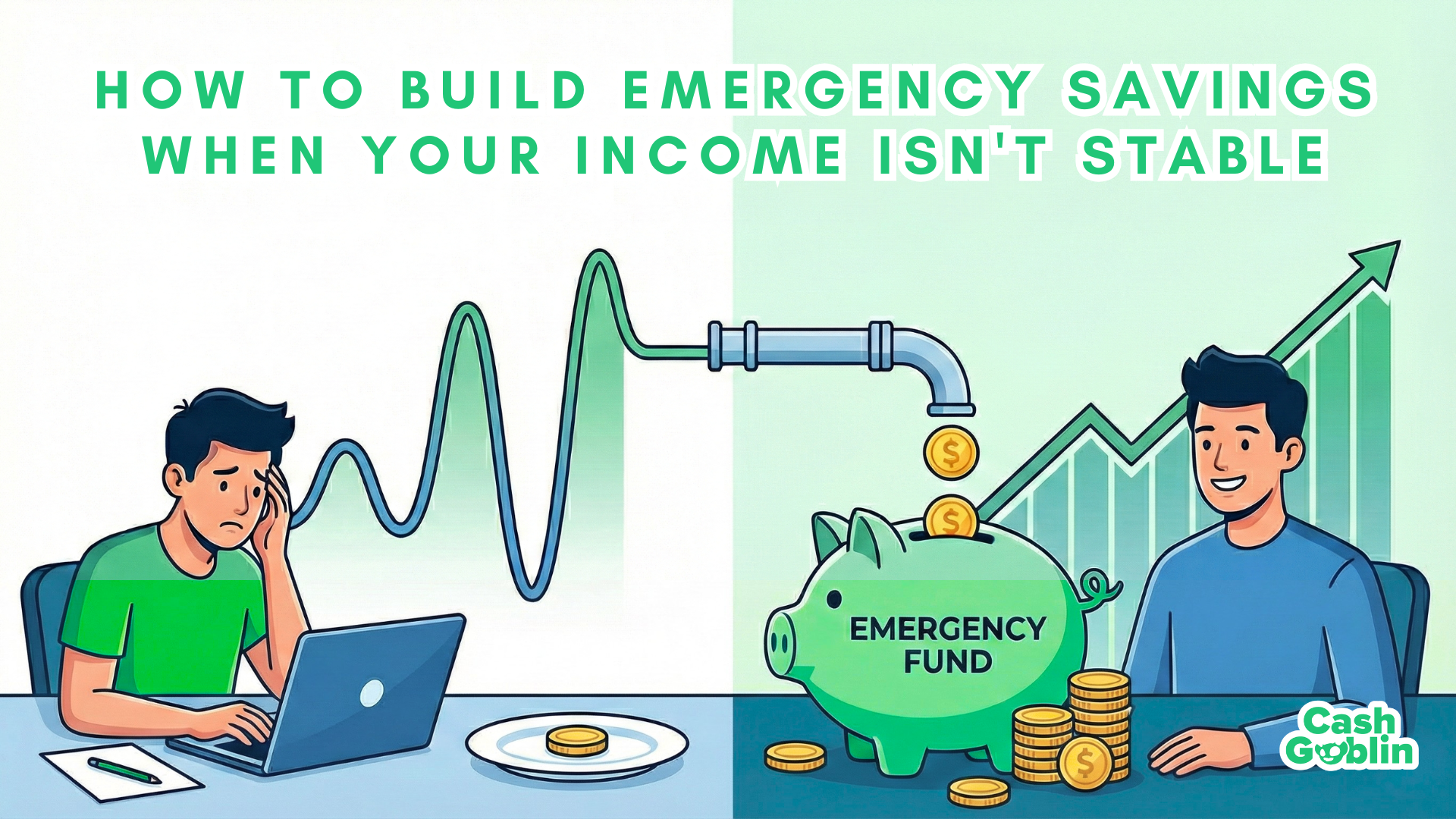
Over 70 million Americans (about 36% of the workforce) now work in the gig economy as freelancers or contractors. While this offers freedom, it also brings a lot of stress. Research shows that 80% of independent workers struggle to handle a surprise $1,000 expense because they don’t have a traditional safety net.
When your income goes up and down, normal budgeting advice doesn't work. You can't just "set it and forget it" when you don't know what you'll make next week. To find stability, you have to adopt a system that turns your high-earning months into a shield for your low-earning months.
Why the "3-Month Rule" Is Risky for You
Most experts tell people to save three to six months of expenses. But if you are a freelancer or business owner, that might not be enough. If your work is seasonal or a major client leaves, your income could drop to zero for a long time.
If your income is unstable, you should aim for 6 to 12 months of essential expenses.
- Highly Unpredictable: Aim for 12 months.
- Seasonal but Steady: 6 months might work.
This fund should cover your "survival budget"—rent, utilities, groceries, insurance, and minimum debt payments.
The "Lowest Month" Method: Budget for the Worst Case
One of the best ways to stay safe is the Lowest Month Method. Look at what you earned over the last year and find your lowest-earning month.
Use that number as your "salary."
- The Benefit: If you can live on what you make during your worst month, you will never go into debt during a slow season.
- The Plan: Every dollar you earn above that lowest amount goes straight into your emergency savings.
The Hill and Valley Fund: Smooth Out the Bumps
A Hill and Valley Fund is a separate account used to even out your life.
- The Hills: When you have a great month with lots of extra cash, you put the surplus into this account.
- The Valleys: When you have a lean month, you "pay yourself" from this account to cover your bills.
By moving money this way, you create your own steady paycheck. You use the "hills" to fill in the "valleys" so you never feel the pinch of a slow month.
Cash Stuffing: The Power of Envelopes
Many people find it hard to track digital spending because it doesn't feel real. The Cash Envelope System (also called "Cash Stuffing") gives you a physical limit on your spending.
Here is how to do it:
- Pick your categories: Use envelopes for things that change, like groceries, gas, and fun money.
- Withdraw cash: When you get paid, take out the cash you need for those categories.
- Stuff the envelopes: Put the exact amount in each labeled envelope.
- Stop when it's gone: Once an envelope is empty, you stop spending in that category until next month.
Tax Buffers: Your Hidden Safety Net
As a freelancer, you are your own HR department. You must set aside 25% to 30% of every check for taxes.
Keeping this money in a separate high-yield account does two things:
- It protects you from IRS penalties.
- It acts as a "lender of last resort." In a true disaster, this money is liquid and available to keep you afloat.
FAQs: What People Are Asking
How much should I save if my income is irregular? Aim for 6 to 12 months of essential expenses. Use your "bare-bones" budget (rent, food, and bills) to find this number, not your total lifestyle spending.
What is the "Hill and Valley" method? It is a way to save extra money from your best months (the hills) to cover your costs during your slowest months (the valleys). It helps you stay stable all year long.
Should I pay off debt or build an emergency fund first? Build a "Starter Fund" of $500 to $1,000 first. This small cushion keeps you from using credit cards when a small emergency happens. Once that is set, focus on high-interest debt over 20% APR.
What is the best way to track spending with a variable income? Many variable earners prefer a "Zero-Based Budget." This means you give every dollar a job (even if the total amount changes every month) until you have $0 left to assign.
Where is the best place to keep my emergency fund in 2026? Keep your immediate cash in a High-Yield Savings Account (HYSA). These accounts currently offer 4-5% interest and allow you to get your money quickly if you need it.
The Bottom Line
If you are self-employed, your "emergency fund" is actually your income insurance. Since you don't have a corporate safety net, your bank account has to do that job for you.
The goal is to de-risk your life. When you use the "Lowest Month" method and build a "Hill and Valley" fund, you stop the stressful cycle of feast and famine. You effectively give yourself a steady salary, even when your clients are slow to pay.
Take these three steps today:
- Find your "Survival Number": Add up your rent, groceries, and utilities. This is the bare minimum you need to stay afloat.
- Automate your "Hill" deposits: The moment a big check hits, move everything above your survival number into a High-Yield Savings Account. Don't let it sit in your checking account, where it’s easy to spend.
- Respect the Tax Buffer: Never "borrow" from your tax savings. Keep that 30% in a separate account so you never have to choose between paying the IRS and paying your rent.
Make Your Business Pay You First
Your "Hill and Valley" fund only works if your business actually has a surplus. If you are tired of living on "whatever is left" after expenses, the Profit First e-course gives you the exact system to fix it.
Stop guessing if you can afford your "Survival Number" this month. Learn how to carve out your profit and tax buffer from every single check before you spend a dime on overhead.
Start Running Your Profit First System Here


.png)


.png)

.png)