
Overview
- Debt management begins with changing your daily financial habits rather than fighting complex spreadsheets.
- Traditional budgeting fails because human willpower runs out, leaving debt repayment to compete against daily expenses.
- Profit First accounting flips the script by setting aside money for debt and savings before you pay your regular bills.
- By using separate bank accounts, you create automatic boundaries that protect your cash, lower stress, and build lasting financial wellness.
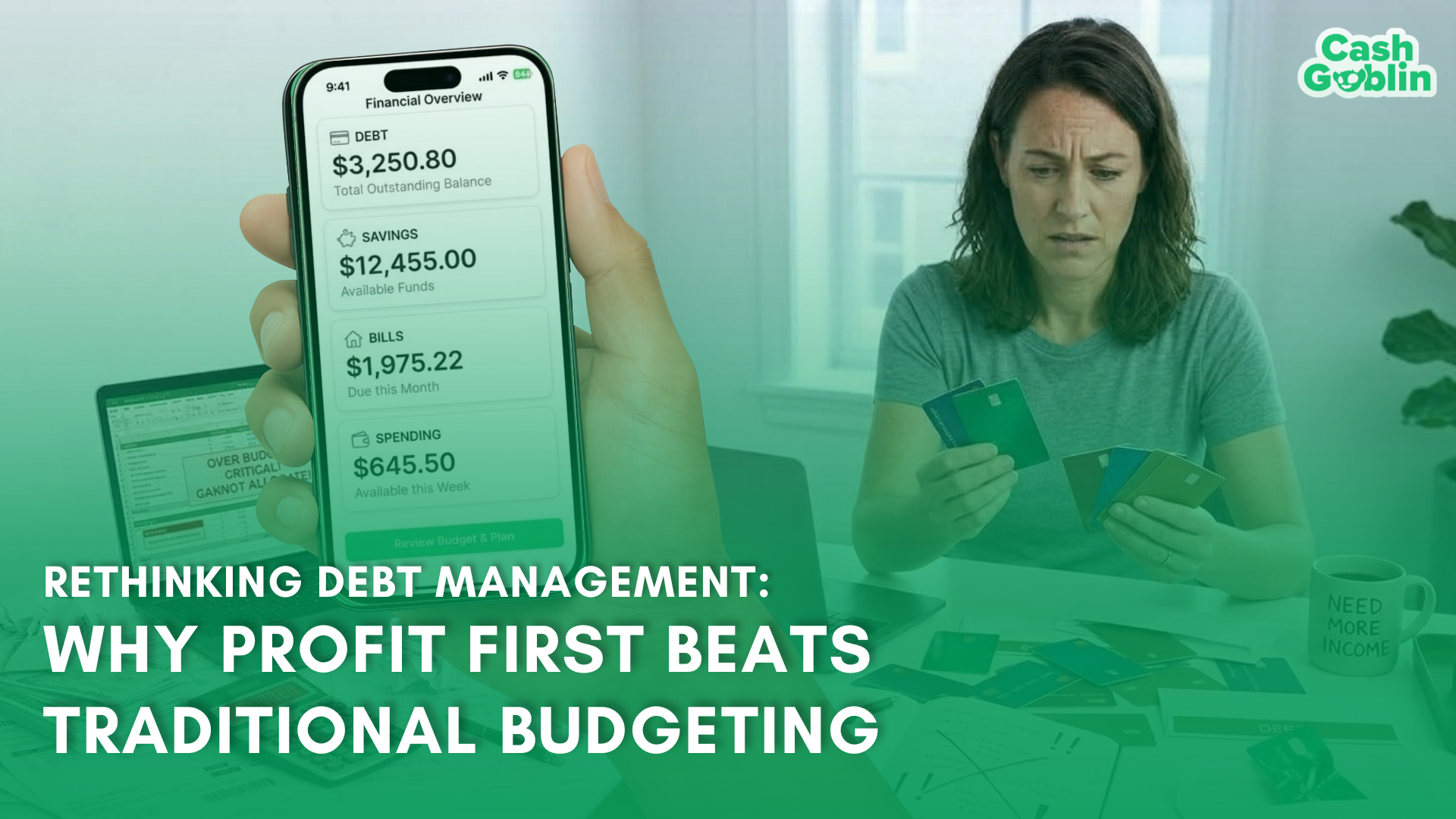
Many people spend years believing they are bad with money simply because their budget keeps breaking down. You build a careful plan, swear to cut costs, and promise that this month will be different. Then real life happens: an unexpected repair pops up, grocery prices jump, or daily demands eat away at what was left.
It is easy to feel defeated and assume you just lack willpower, but the truth is much simpler: traditional budgeting is broken. Trying to force your life into rigid spreadsheets goes against the way real humans think and make decisions.
This guide will show you a kinder, more realistic path forward. By applying the proven principles of the Profit First system to your personal finance routine, you can break the feast-or-famine cycle, pay down what you owe, and regain lasting peace of mind.
Why Traditional Budgeting Fails at Debt Management
Most of us were taught a basic financial formula: take what you earn, subtract what you spend on living and bills, and use whatever is left over to pay off debt or build savings. On paper, that sounds completely reasonable. In real life, it almost never works. When debt repayment comes last, it gets treated as an optional afterthought, and there is rarely any money left when the month wraps up.
The Willpower Trap in Everyday Personal Finance
Traditional budgeting expects you to act like a computer. It asks you to track every receipt, categorize every coffee run, and calculate budget variances after the money has already left your pocket.
The problem is that willpower is a limited resource. When you come home after a long, stressful workday, your brain is exhausted. Keeping track of numbers on a spreadsheet is the last thing you want to do. Strict diets and restrictive budgets often end the exact same way: you feel deprived, fatigue sets in, you overspend out of frustration, and the plan gets abandoned completely.
Bank Balance Habits and Parkinson's Law
Most people do not open a spreadsheet before buying groceries or paying a bill. Instead, they log into their mobile banking app, glance at the total balance, and make a quick mental call on what they can afford.
When all your money sits pooled together in a single checking account, that balance plays a trick on your brain. This trap is driven by a well-known behavioral principle called Parkinson’s Law, which shows that we naturally consume all of a resource made available to us. If you see $3,000 sitting in your primary account, your brain treats that full amount as available spending money. It completely hides the fact that upcoming loan payments, taxes, or rent are waiting around the corner. Before you know it, that money vanishes into general living costs, leaving nothing behind to tackle your debt.
How Profit First Accounting Reinvents Debt Management
Created by author and entrepreneur Mike Michalowicz, the Profit First approach flips traditional money management on its head. Instead of spending first and hoping for leftover cash, this method reverses the order: you take your savings and debt paydown off the top as soon as money arrives, and you live on what remains.
This simple switch changes everything. Rather than treating debt reduction as a wishful goal for someday, you make your financial wellness a mandatory part of every single deposit.
The Behavioral Magic of the "Small Plates" Method
When you want to eat healthier portions, using smaller dinner plates naturally stops you from overeating without feeling starved. Profit First does the exact same thing with your money by dividing your cash across multiple, separate bank accounts.
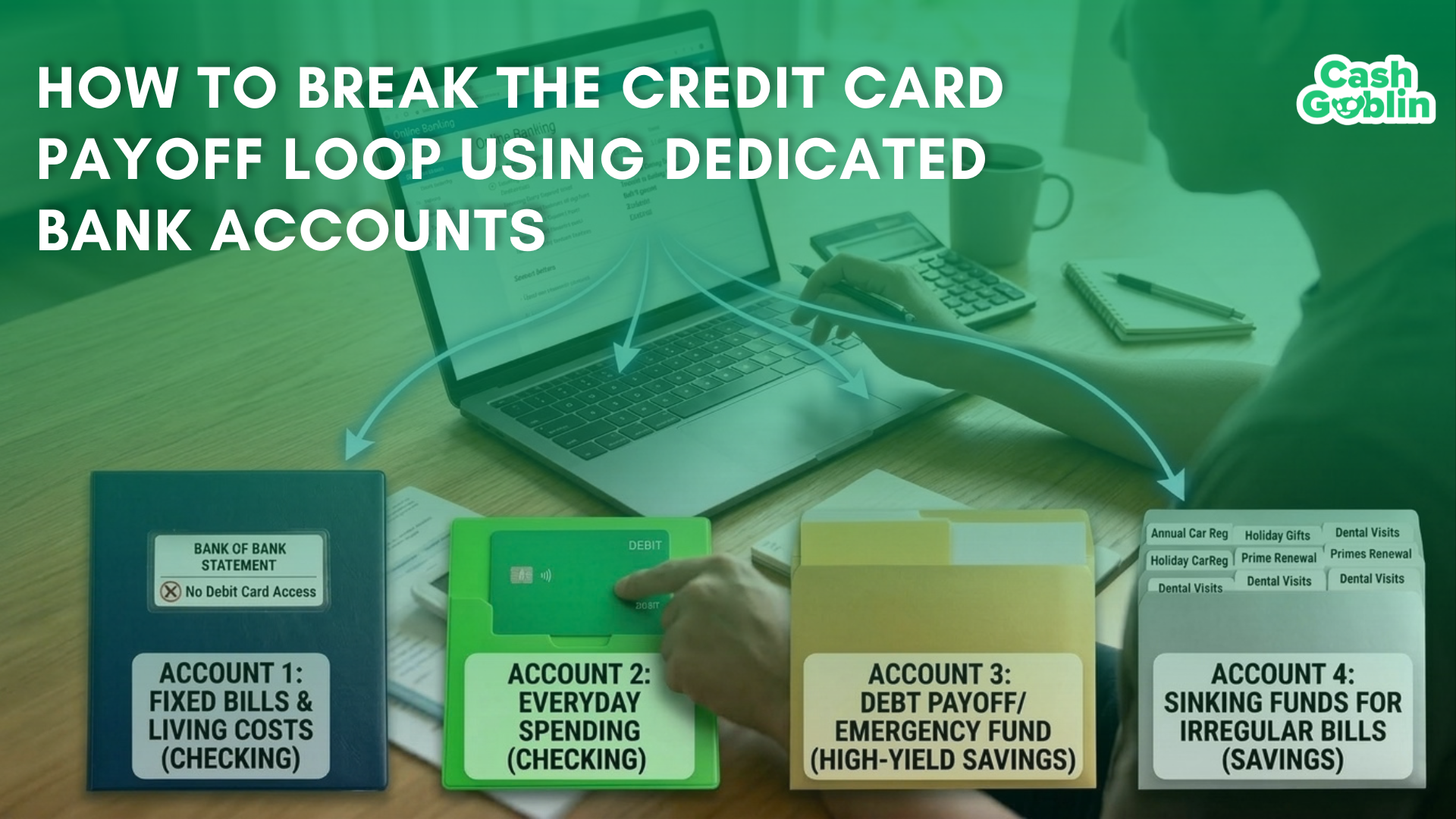
Instead of dumping every dollar into one big pot, you set up dedicated accounts for specific purposes:
- Income Account: A clearing hub where your paycheck or revenue lands, and from which no everyday bills are paid.
- Profit and Debt Account: A protected reserve set aside strictly to build an emergency fund and pay down debt balances.
- Tax Account: A dedicated space for upcoming tax liabilities so you are never caught off guard.
- Living or Operating Expenses: The everyday account used to pay regular bills, utilities, and daily necessities.
When you check your everyday account balance, you only see the money that is actually safe to spend. The cash needed for debt reduction and future safety has already been tucked away where daily impulses cannot reach it.
Giving Every Dollar a Job Before You Spend
This account setup takes advantage of a psychological concept known as mental accounting. Research shows that people naturally view and treat money differently depending on where it sits and what purpose it holds.
When debt payoff money is locked in a separate account, you stop viewing it as disposable income. You do not have to battle temptation because you have removed easy access. By putting friction between yourself and your savings—such as using an account at a different bank with no debit card—you protect your progress from impulse spending.
Smarter Debt Management: Knocking Out Balances with Profit
Paying off debt with Profit First does not mean living in total misery or giving up every creature comfort. In fact, the system relies on intentional rewards and steady momentum to keep you motivated for the long haul.
Finding Quick Emotional Wins with the Debt Snowball
Debt carries a heavy emotional burden, and that stress can leave you feeling frozen. To build confidence, the Profit First framework pairs directly with the Debt Snowball method.
You keep making minimum payments on your obligations from your general living account so your accounts stay in good standing. Then, you list your debts in order from the smallest balance to the largest balance. By directing extra cash toward your smallest debt first, you knock it off your plate fast. That quick win gives you a healthy rush of accomplishment, proving to your brain that becoming debt-free is entirely possible. With that balance gone, you roll the money you were paying toward the next smallest debt, picking up speed as you go.
The 95% Quarterly Paydown Strategy
A core habit of profit first accounting is taking a structured distribution every ninety days. If you have debt, you can use a simple paydown rule:
- Direct 95% (or up to 99%) of your accumulated profit account balance straight toward principal debt reduction.
- Use the remaining one to 5% to celebrate with a small personal reward.
Taking a tiny reward (even if it is just $15 or $20 for a nice meal or a book) matters deeply. Extreme restriction leads to burnout and budget rebellion. Celebrating small milestones gives you a concrete reason to keep going, while the bulk of your funds chips away at your loan principal every three months.
Practical Steps to Build Lasting Financial Wellness
Getting started does not require an accounting degree or hours of complicated math. You can ease into this approach gradually to give yourself room to adapt.
Setting Up Your Accounts and Allocation Rhythm
You do not need to overhaul your entire financial life overnight. Start by opening your separate accounts and setting realistic, modest targets:
- Open the basic accounts: Set up your primary checking account for incoming deposits and an everyday account for bills. Then, open a dedicated savings account for profit and debt paydown.
- Start small: If setting aside ten percent right away feels too tight, start with just one to two percent. The habit of putting money aside first is far more important than the initial size of the deposit.
- Pick a consistent routine: Rather than moving money around every day, set a fixed rhythm, such as twice a month on the 10th and 25th, or on your paydays. On those days, allocate your money according to your percentages, pay your scheduled bills, and let the rest sit safely undisturbed.
Trimming Expenses by Ten Percent Without Sacrificing Comfort
To make room for consistent debt elimination, look through your monthly recurring expenses with a gentle eye. A great benchmark is looking for a simple ten percent reduction in total overhead:
- Review forgotten app subscriptions, streaming services, and memberships you no longer use.
- Call service providers to ask about lower rates on car insurance, phone plans, or home internet.
- Look for lower-cost grocery alternatives and plan meals ahead to trim food waste.
Cutting just ten percent gives you immediate breathing room. That newly found cash flows directly into your debt paydown reserves, speeding up your journey to freedom.
Frequently Asked Questions
Can Profit First accounting work for personal finance and debt management?
Yes. While originally designed for businesses, the behavioral rules work wonders for personal budgets. Dividing your paycheck into separate accounts for bills, debt, and emergencies curbs impulse spending and gives you clear, real-time spending limits.
How does Profit First pay off debt faster than traditional budgeting?
Traditional budgeting relies on leftover money that rarely materializes. Profit First reserves debt payments upfront. Using protected quarterly distributions, you make focused lump-sum payments directly against debt principal without disrupting your everyday living expenses.
What if I can only set aside a tiny amount for debt right now?
Start with just one percent. Profit First is about building the behavioral habit of paying yourself before spending. Even small wins create emotional momentum, lower financial anxiety, and make it easy to increase your percentages over time.
How does Profit First support long-term financial wellness?
It removes the cognitive fatigue of tracking receipts and spreadsheets. Physical account separation creates automated boundaries that protect your money. You build real emergency savings, steer clear of new debt, and gain true financial peace of mind.
Bottom Line
Becoming debt-free is not about mastering complex mathematics or punishing yourself with endless restriction. It is about building a supportive environment that works with your natural human habits. By trading rigid spreadsheets for the clear, automated boundaries of Profit First, you take the pressure off your willpower.
Be patient with yourself as you take these first steps. Every single dollar you intentionally set aside is proof that you are taking back control of your future. You have the ability to break free from debt, build real security, and create the peaceful financial life you deserve.
Take the Next Step Toward Financial Wellness
Ready to make your financial journey simple, sustainable, and stress-free? You do not have to figure out this transition on your own.
Sign up for our Profit First Accounting e-course today to get the tools, guidance, and support you need for effortless financial planning and systematic debt repayment. You will learn how to customize your account setup, choose the right starting percentages, and build a lasting habit of profitability from your very next paycheck.
Start putting your peace of mind first today, and get ready for the upcoming launch of Cash Goblin, our all-in-one platform built to bring full-fledged automation to your cash management. Enroll in the e-course now and step confidently onto the path toward true financial wellness!
UNLOCK THE PROFIT FIRST ACCOUNTING METHOD HERE


.png)


.png)

.png)