

Key Takeaways: The Profit First Advantage
- The Profit First Flip: You change the formula to Income - Profit = Expenses, making profit a non-negotiable reality from the start.
- Digital Envelope Method: You allocate funds into specific "goals" or digital accounts immediately upon receipt.
- Managing Real Revenue: High-level wealth building focuses on Gross Profit (Real Revenue) rather than misleading top-line sales.
- Non-Negotiable Tax Reserves: Setting aside a percentage of every deposit for taxes protects your wealth from expensive IRS late-payment penalties.
- Percentage-Based Growth: Using percentage rules ensures that as your income grows, your wealth-building scales automatically.
- Operational Cleanliness: Moving from reactive "checkbook accounting" to a proactive system increases your business stability and bank credibility.
Traditional accounting follows a logic that has been taught for centuries: Sales - Expenses = Profit. In this model, profit is a "leftover." It’s a hopeful result that appears at the bottom of a spreadsheet if you manage to spend less than you earn. However, for most business owners, this formula leads to a reactive struggle where the bank balance dictates every decision.
The Profit First methodology, supported by the proactive principles of the Tax Goddess firm, flips this equation to ensure that financial freedom is a deliberate design rather than a lucky accident. By changing your fundamental approach to money management, you can reach financial independence up to five years sooner.
Here are five ways switching to a Profit First system will transform and save your business.
1. The "Profit First Flip": Making Profit a Reality, Not a Result
The core principle of Profit First is changing the accounting formula to Sales - Profit = Expenses. This isn't just a math trick; it is a fundamental "brain shift".
When you treat profit as a non-negotiable expense you have to set aside before any spending begins, you make your desired profit your reality from the very start. This ensures that your business serves you as the owner first, rather than you serving a business that may or may not have "crumbs" left over at the end of the year.
2. Weaponizing Parkinson’s Law Through the "Small Plate Theory"
Most business financial struggles stem from a psychological phenomenon known as Parkinson’s Law, which suggests that we consume whatever resources are available to us. If all your money is sitting in one large operating account, you feel "rich" and naturally find ways to spend it.
Profit First uses the "small plate theory" by immediately moving money into separate accounts, or digital envelopes, the moment income is received. By allocating funds into specific "goals" like Taxes, Owner’s Pay, and Profit, you leave a "skinnier" amount in your Operating Expenses account. This forces you to be more innovative and efficient with the remaining funds, ensuring the business stays lean and healthy.
3. Managing "Real Revenue" to Prevent Over-Expansion
A major trap for growing businesses is focusing on "top-line" sales, which can be a work of fiction. Profit First forces a focus on Real Revenue, which is the money left after the cost of materials and subcontractors is paid.
A common starting point in the system is allocating a set percentage (often 5% of Real Revenue) directly into a separate Profit account. Because the system uses percentage-based rules, your wealth-building scales automatically as your income grows. This prevents the common "growth trap" where a business does more work but ends up with less actual cash in the bank.
4. Establishing an Accountability Structure via Multiple Accounts
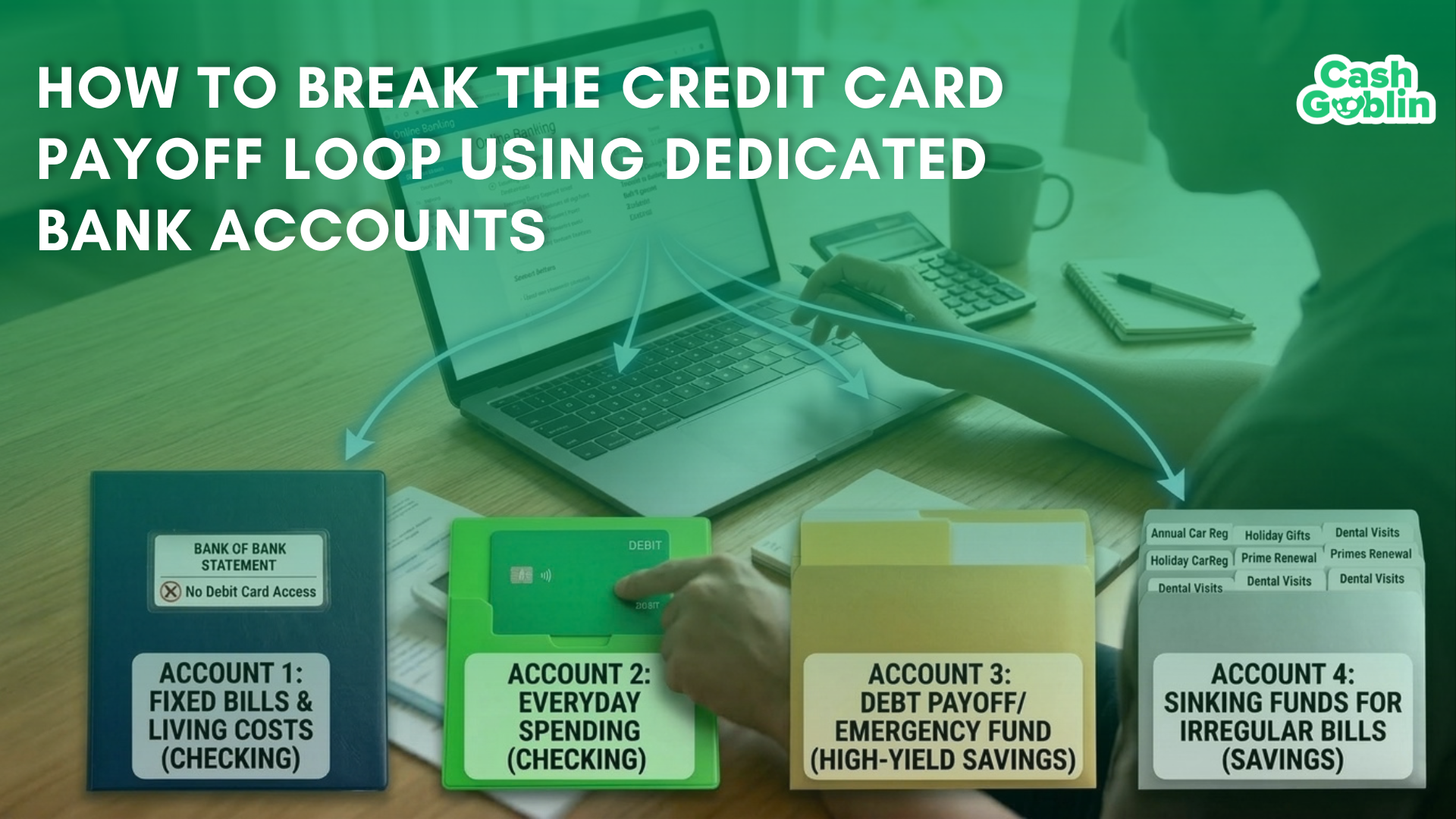
To move away from "checkbook accounting," the Profit First system requires a specific physical structure for your banking. This is often referred to as the Digital Envelope Method. By opening multiple accounts, you create clear boundaries for every dollar:
- Income Account: The landing strip for all deposits.
- Profit Account: A vault for profit retention, distinct from your pay.
- Owner’s Pay: A dedicated account for your actual salary.
- Tax/GST Account: A non-negotiable reserve to protect against IRS penalties.
- Operating Expenses: The "small plate" used to run the day-to-day business.
This structure provides Proactive Visibility, allowing you to see business health at a glance without having to make sense of a complex profit-and-loss statement.
5. Transitioning from Debt to "In Funds" Credibility
The impact of installing these mechanics is often rapid and profound. Many businesses that struggle with overdrafts or lines of credit find themselves "in funds" within 12 months of switching to Profit First.
This shift creates Operational Cleanliness. When your business is consistently profitable and taxes are always reserved in advance, financial health skyrockets. Business owners often find that they no longer want to sell their company because the system has removed the "firefighting" energy and replaced it with a stable, predictable wealth-building machine.
Frequently Asked Questions: Profit First Accounting
What is the "Profit First" formula?
Traditional accounting uses the formula Sales - Expenses = Profit, which treats profit as a leftover. The Profit First formula flips this to Sales - Profit = Expenses. By treating profit as a non-negotiable deduction that occurs before any spending begins, you ensure your business is profitable from every deposit.
How does the Digital Envelope Method work for business?
The Digital Envelope Method digitizes the old-school cash envelope system by using separate bank accounts to allocate funds immediately upon receipt. Instead of looking at one total bank balance, you distribute money into specific "goals"—such as Taxes, Owner’s Pay, and Profit—to create clear boundaries for every dollar.
What is "Real Revenue" in Profit First?
Real Revenue (also known as Gross Profit) is the money remaining after you have paid for materials and subcontractors. Profit First emphasizes managing this number rather than "top-line" sales, as it represents the actual funds available to run the business and pay the owner.
Why do I need multiple bank accounts for my business?
Opening multiple accounts (ideally at least five to seven) removes the temptation of "checkbook accounting". By separating funds into dedicated accounts for Tax Reserves, Profit, and Operating Expenses, you protect your wealth from accidental spending on daily operations or costly IRS late-payment penalties.
How does Profit First help with tax planning?
Profit First makes tax preparation proactive by setting aside a non-negotiable percentage of every deposit into a dedicated Tax Account. This ensures that when tax season arrives, the funds are already reserved, protecting the business from the stress of large, unexpected government bills.
Can Profit First help my business get out of debt?
Yes. By using percentage-based rules, the system forces a business to innovate and operate on what remains after profit and taxes are set aside. This "small plate" approach creates Operational Cleanliness, often moving businesses from a cycle of debt or overdraft to being "in funds" within 12 months.
Installing Your Profit First System
The Profit First methodology transforms money management from a struggle into a proactive system. While traditional plans often fail because they rely on human perfection, the Profit First rhythm creates a "crystal ball" for your finances, allowing you to identify "attention points" before they become emergencies.
By organizing your bank accounts and setting target percentages today, you can make profit the default for your business.
The upcoming Cash Goblin app is being built to help you automate the Profit First Accounting method.
While the new version is in development, you can start mastering the system today through the Profit First e-course.
INSTALL THE PROFIT FIRST SYSTEM HERE AND SECURE BUSINESS PROFIT NOW


.png)


.png)

.png)