

At a Glance: Why Your Debt is Stealthily Delaying Your Freedom
- The Math Gap: With average interest rates at 22.8% in 2026, your debt is growing twice as fast as the stock market.
- The Rewards Trap: Earning 2% in points while paying 22% in interest is a guaranteed way to lose money.
- The Safety Net Myth: Using a credit card for emergencies often leads to a "shame cycle" of debt that is hard to break.
- Guaranteed Returns: Paying off a high-interest card is the only way to get a "guaranteed" 22% return on your money today.
- The Subscription Leak: Small, forgotten monthly fees can add up to thousands of dollars in lost retirement savings over time.
If you are part of the "FIRE" movement (Financial Independence, Retire Early), you probably spend a lot of time looking at your investments. You might be in the "Boring Middle"—that phase where you are working hard, saving money, but it feels like your retirement date isn't getting any closer.
In 2026, it is harder than ever to ignore the "hidden anchor" holding you back: credit card debt. With prices higher than they used to be, many people have started using cards to manage daily life. But if you want to retire 10 or 20 years early, even a small balance is a "silent killer" of your dreams.
Here are the five biggest credit card mistakes that could be adding years to your working life.
1. Thinking "Minimum Payments" Are Enough
Many people feel like they are doing well as long as they pay the "minimum amount" on their statement. But in 2026, interest rates are at record highs.
If you owe $6,500 (the average U.S. balance) and only pay the minimum, it could take you 219 months (nearly 18 years) to pay it off. During that time, you would pay over $9,000 in interest alone.
The FIRE Fix: Stop seeing the minimum as a goal. Every extra $50 or $100 you pay today is like "buying back" months of your future freedom.
2. Falling for the "Rewards Mirage"
We all love travel points and cashback. But if you carry a balance from month to month, those points are a trap.
Most cards give you back about 2% of what you spend. But they charge you 22% in interest. If you spend $1,000 to get $20 in points, but pay $220 in interest over the year, you haven't "hacked" the system; you’ve lost $200.
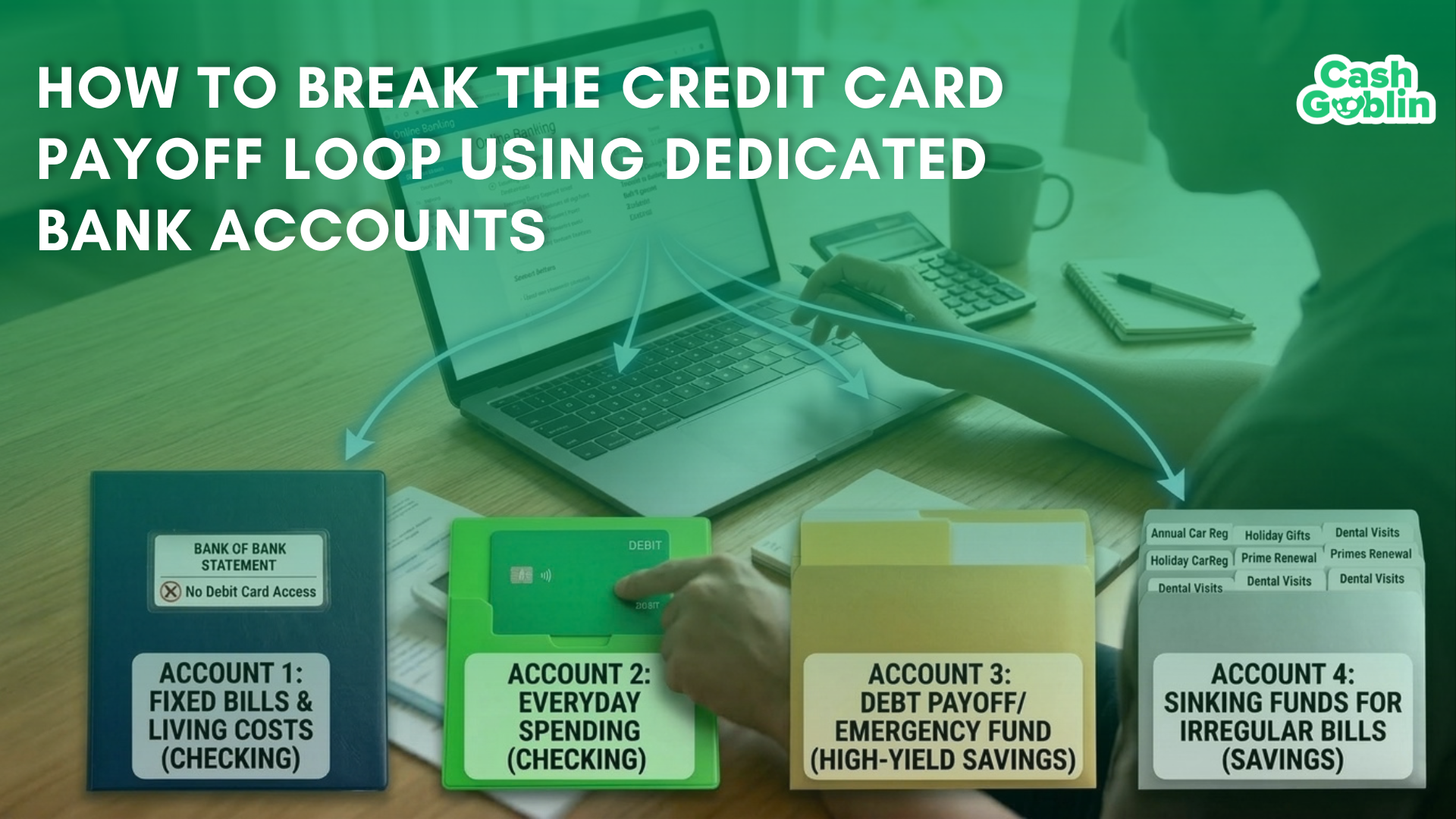
The FIRE Fix: If you cannot pay your card in full every single month, stop using it for rewards. Use a debit card until you are debt-free so your "points" don't come at the cost of your net worth.
3. Using Your Credit Limit as an Emergency Fund
In 2026, about 25% of "surprise" credit card debt comes from medical bills and car repairs. It is tempting to think, "I don't need a savings account because I have a $10,000 credit limit."
However, when an emergency happens and you put it on a card, the high interest makes that emergency even more expensive. This leads to a cycle where you are always "catching up" and can never afford to invest for retirement.
The FIRE Fix: Build a "buffer." Even saving just $20 a week in a separate account can give you the cash you need for life’s surprises without touching your credit card.
4. Holding "Hot" Stocks While Carrying Debt
A unique mistake people make in 2026 is keeping money in popular "AI stocks" or the S&P 500 while they still have credit card debt.
On average, the stock market grows by about 10% a year. But your debt is likely growing at 22%. If you keep your money in the market instead of paying off the card, you are choosing a 10% gain while ignoring a 22% loss.
The FIRE Fix: Think of paying off your debt as a guaranteed investment. There is no stock in the world that can "guarantee" you a 22% return, but paying off your card does exactly that.
5. Ignoring "Digital Leaks" and Small Habits
Early retirement is often killed by "the death of a thousand cuts." In 2026, this looks like forgotten streaming subscriptions, app fees, and "little treats" that we buy on impulse.
Many people discover they are spending hundreds of dollars a month on things they don't even use. Because these are charged to a credit card, we often don't notice them until the bill is huge.
The FIRE Fix: Do a "30-Day Expense Audit." For one month, write down every single thing you buy. You will likely find "leaks" that you can plug, allowing you to move that money into your retirement fund instead.
Frequently Asked Questions
Q: Does carrying a small balance help my credit score?
A: No. This is a common myth. Paying your card in full every month is the best way to keep a high score. Using too much of your limit actually lowers your score.
Q: Should I stop saving for retirement until my debt is gone?
A: If your job offers a "company match" for your 401(k), take it first—that's free money. After that, focus every extra dollar on debt that has an interest rate higher than 7% or 8%.
Q: How do I know which card to pay off first?
A: You can use the Avalanche Method (pay the one with the highest interest first to save money) or the Snowball Method (pay the smallest balance first for a quick win). Both work - the key is to stay consistent.
Q: Can I ask my bank to lower my interest rate?
A: Yes! In 2026, many banks are willing to negotiate if you have been a loyal customer and pay on time. It never hurts to call and ask for a lower "promotional rate."
Take Back Your Future
Achieving financial independence isn't about being perfect; it's about being mindful. Every dollar you pay toward a high-interest credit card is a dollar that stops working for the bank and starts working for you.
Avoiding these five mistakes allows you to clean up your finances and buy back time. Start your 30-day audit today and see how much faster your early retirement dreams can become a reality.
Achieve Your Early Retirement Dreams With Profit First Accounting
A truly successful business doesn't just survive on "break-even" months; it actively builds your wealth. If you are tired of hoping there’s something left for your retirement fund at the end of the month, it’s time to change the math.
The Profit First e-course provides the foundational structure to move from "leftover" savings to guaranteed growth. Stop claiming profit by accident - unlock financial freedom on purpose.
INSTALL THE PROFIT FIRST SYSTEM NOW


.png)


.png)

.png)